Tuesday, December 20, 2016

Wednesday, December 14, 2016
Friday, December 9, 2016
Thursday, December 8, 2016
Free Ross-A-Thon Re-Cap: Lyn Ulbricht and Tatiana Moroz Interviewed on Bitcoin.com
On Sunday liberty activists gathered to promote a message of freedom and justice and to raise funds for the Free Ross campaign. The aim was to raise $14,000 USD to pay off the cost of printing the appeal. The Free Ross Campaign’s work extends beyond Ross Ulbricht’s case and seeks to shed light on the... Read more »
The post Free Ross-A-Thon Re-Cap: Lyn Ulbricht and Tatiana Moroz Interviewed on Bitcoin.com appeared first on Tatiana Moroz.
from Tatiana Moroz http://ift.tt/2ggDJiB
via Tatiana Moroz
Tuesday, December 6, 2016
Tuesday, November 29, 2016
Monday, November 28, 2016
Tuesday, November 22, 2016
Friday, October 28, 2016
Tatiana Moroz Interviewed on Rogue Money
Tatiana Moroz appeared on Rogue Money on October 27th, 2016. The shows host–The Guerrilla–discussed a wide variety of topics with Tatiana. They talk crypto, the Silk Road case, politics, and of course…freedom. A very insightful interview!
The post Tatiana Moroz Interviewed on Rogue Money appeared first on Tatiana Moroz.
from Tatiana Moroz http://ift.tt/2eTiBLQ
via Tatiana Moroz
Thursday, October 27, 2016
Sunday, October 23, 2016

Thursday, October 20, 2016
Tuesday, October 18, 2016
Picture by Franklin I just came across :) #liberty #live #music #tatianacoin

Via http://tatianamusic.com
Saturday, October 15, 2016

Friday, October 14, 2016

Thursday, October 13, 2016
Hanging with the karaoke crew at the Contra Krugman crew :) #economics #karaoke #cruising

Via http://tatianamusic.com
Sunday, October 9, 2016
Tuesday, October 4, 2016
Monday, October 3, 2016
What is Bitcoin? Tatiana Moroz on Kristin Tate’s Be The Change Show
If you don’t know what Bitcoin is, here’s your chance to get a condensed understanding. Tatiana Moroz is a singer-songwriter, so you might wonder why Kristin Tate is doing an episode of the Be The Change podcast with her about a topic like Bitcoin. The reason is that Tatiana is not only using Bitcoin as a... Read more »
The post What is Bitcoin? Tatiana Moroz on Kristin Tate’s Be The Change Show appeared first on Tatiana Moroz.
from Tatiana Moroz http://ift.tt/2d9N8Ti
via Tatiana Moroz
Tatiana Moroz Interviewed on The Bunbury Report
Tatiana Moroz joins Joey Clark to discuss her music career, how she fell in love with liberty, her own cryptocurrency, Tatiana Coin, and much, much more!
The post Tatiana Moroz Interviewed on The Bunbury Report appeared first on Tatiana Moroz.
from Tatiana Moroz http://ift.tt/2dzqvew
via Tatiana Moroz
Tatiana Moroz Listed as One of the Top FinTech Influencers in the USA
These are exciting times for financial services. On one hand, several FinTech startups are providing solutions for specific problems and on the other, incumbents are bringing more digitization and tech-enabled products to their existing customers. The ongoing debate between banks and FinTechs at war is also giving way to collaboration, partnership and acquisition. Recently Let’s... Read more »
The post Tatiana Moroz Listed as One of the Top FinTech Influencers in the USA appeared first on Tatiana Moroz.
from Tatiana Moroz http://ift.tt/2dmjj7x
via Tatiana Moroz
Freedom Fest TV with Tatiana Moroz, Terry Brock, and Gina Carr
Tatiana Moroz was so happy to be invited to speak on the Silk Road panel this year at Freedom Fest, as it allowed her the chance to connect again with Terry Brock and Gina Carr. The Silk Road case is a subject important to all of the guests. An enjoyable interview, and Tatiana even performed... Read more »
The post Freedom Fest TV with Tatiana Moroz, Terry Brock, and Gina Carr appeared first on Tatiana Moroz.
from Tatiana Moroz http://ift.tt/2dmjFLu
via Tatiana Moroz
Tatiana Moroz on Declare Your Independence with Ernest Hancock 6/23/16
Tatiana Moroz was on Declare Your Independence with Ernest Hancock to talk about music, freedom, art as activism, and her upcoming third album: “Keep the Faith”. Ernie always does a fun interview and brings a lot of energy to the table. Other guests on this episode included Rassah Muraschik, and Luke Leighton and Chris Waid... Read more »
The post Tatiana Moroz on Declare Your Independence with Ernest Hancock 6/23/16 appeared first on Tatiana Moroz.
from Tatiana Moroz http://ift.tt/2dnqxWz
via Tatiana Moroz
Wednesday, September 28, 2016
Monday, September 26, 2016
On the way to #lfnyc a couple days back with one of my favorite #freedom fighters :)

Via http://tatianamusic.com
Wednesday, September 21, 2016
Monday, September 19, 2016

Wednesday, September 14, 2016
Thursday, September 1, 2016


Wednesday, August 31, 2016


Excited for my #italy trip! At the airport and as you can see, I went ultra blonde in preparation :)

Via http://tatianamusic.com
Sunday, August 28, 2016

Saturday, August 27, 2016
Friday, August 26, 2016
Feeling grateful this Friday for all of my supporters out there!! #HappyFriday #FreeTheArt

Via http://tatianamusic.com
Thursday, August 25, 2016

Wednesday, August 24, 2016
Tuesday, August 23, 2016

Monday, August 22, 2016
Tatiana Moroz on Kurt Wallace’s “The Flow”
Tatiana Moroz, singer-songwriter, liberty activist, and Bitcoin educator, sits down with Kurt Wallace to discuss her life growing up in a family from Poland, which she visited every summer. She explains a concept of attachment levels within relationships and how that shapes the way people interact. She then shares how her grandmother has influenced her... Read more »
The post Tatiana Moroz on Kurt Wallace’s “The Flow” appeared first on Tatiana Moroz.
from Tatiana Moroz http://ift.tt/2c0jNPC
via Tatiana Moroz
Sunday, August 21, 2016
Thursday, August 18, 2016


Tuesday, August 16, 2016
Tuesday, August 9, 2016
Monday, August 8, 2016
Sunday, August 7, 2016
Sad picture on my friends wall, but it's sort of striking so I wanted to share

Via http://tatianamusic.com
Saturday, June 18, 2016
Not Too Late for Humans to Save Ethereum.
*disclaimer, the author is a contractor to the Dash network*
Summary of #DAOhack for the uninitiated:
- The DAO was a highly experimental smart contract that went viral and raised $160M worth of Ethereum. (15% of the total supply)
- The DAO’s code was flawed, resulting in ~1/3 of the funds being syphoned off into a “child-DAO”, which is frozen for 27 days. (note this is 5% of the ETH supply)
- The creators of The DAO (slock.it) and the creator of Ethereum (Vitalik Buterin) hastily proposed a plan to unwind The DAO, recapturing the ETH improperly syphoned off into the child-DAO for the proper DAO token holders to redeem.
- The proposal to have Ethereum interfere with The DAO contract at a network level has met stiff resistance, with opponents declaring it an improper, possibly illegal, intervention in a valid contract.
There is never a dull day on the internet. Today, some of the most ambitious and intelligent members of our community ate their hats. They shot for the moon, and missed. The rocket hasn’t crashed, yet, though.
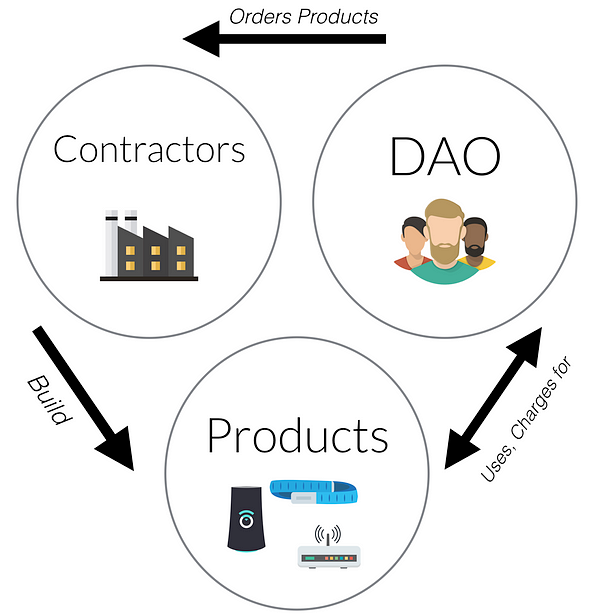
To understand what went wrong, it is best to take a step back. What is The DAO? What is a DAO? DAO is a term used in the Ethereum community. It stands for Decentralized Autonomous Organization, and is a blockchain-centric organizational model. Instead of incorporating your team in the legal system, you register in a blockchain, including your bylaws, stocks, and other contracts.
Sounds great. Its quite decentralized, and facilitates coding rules of operations. What’s this Autonomous bit in the middle, though? How can an organization be Autonomous? It consists of people, and doesn’t exist without people. Sure, the records will be there, like paperwork in an empty office building, but the organization is the people.

From the start, Ethereum has used grand language and exciting ideas to promise sweeping changes to the ways people cooperate and do business. Solidity, Ethereum’s smart contract language, wasn’t perfect, but it was a major advancement from the previous relatively-inflexible contracts, such as simple escrow or document signing. This advancement in platforms has inspired hundreds of developers and entrepreneurs to create exciting and newsworthy applications using Ethereum. One of my favorites isArcade City, who are using smart contracts to decentralize the taxi business even further than Uber.
The DAO of recent controversy was the mother of all Ethereum DAOs. It was an open ended fund that would take in Ether, and invest it in hundreds of projects like Arcade City. Instead of a single purpose, short lived, clear cut contract, they created a long term slush fund. It is easy to see that in hindsight, but is it also easy to have compassion for the victims who didn’t see it in time?
The DAO was a well-meaning, reputable, community audited project. Did they rush and go too far? Yes. The Ethereum community is full of forward-thinking people who believe in the dream of Autonomy. For many of them, however, Autonomy is the ultimate value. No human involvement can be allowed in the rules of contracts or transactions. A blockchain must be inhuman and keep calculating, no matter what.
I do not believe in Autonomy for organizations. Human organizations exist in a moral, social, and even physical background. Without these components, no DAO or blockchain can survive. In fact, all blockchains and blockchain-based organizations do have to acknowledge these factors, and all have governing rules and bodies who navigate the border.
No contract is perfect, not even a smart contract. Contracts between individuals usually exist in the background of a legal and judicial system with levels of law and courts. These layers exist to arbitrate breakdowns in lower courts and contracts. Similarly, no body of law is perfect, and almost every court and constitution in the world is evolving.

If Ethereum is going to succeed, it needs to embrace its human imperfection, and its need to evolve higher arbitration “courts.” These would decide unwinding, bankruptcy and contractual conflicts in cases like The DAO hacking.
Sounds too much like Government for your liking? Sorry, but contracts need governance. Every blockchain has governance, and every transaction and contract are governed.
Blockchain aficionados want to create a world of self-governance, but hate government too much to design proper governance into their creations. Again, hindsight is perfect, but take Bitcoin’s network congestion issues. Bitcoin is governed formally by the miners, but informally by a number competing interests. Because there is no dispute resolution protocol in place, these parties are fragmenting, and the metaphorical commons (the Bitcoin network) is being overgrazed.

Ethereum is now facing a similar crisis: govern a broken contract, or stick to the dream of Autonomy. The moral and human right seems clear: don’t let stakeholders lose to a thief. The only thing holding us back is the shock of realizing that blockchain governance is not only possible but necessary.
What would a higher government for the Ethereum network look like? Well, in the case of Ethereum, the team eventually plans to go to Proof of Stake. Proof of Stake, or PoS for short, is a fancy way of saying that whoever holds the money makes the rules. In that scary case, we can only hope that the 5% of the ETH supply is recovered from the hacker, or they would have 5% voting power in the Ethereum government. Still, in this case, the issue could be put to direct vote by the Ethereum stakeholders, and their decision could be enforced on the sub-contract. This direct democracy of PoS has not been discussed in terms of smart contract arbitration very much, but it is arguably better than no arbitration procedure.

More interesting is to examine another working blockchain governance system, and arguably a more human Decentralized Organization. Dash is a digital currency founded in 2014, which has undergone a number of hard forks. I mean really hard forks. Late last year, they decided to create a second tier on their network, and reward this second tier with 55% of the block rewards that previously went to miners. This 55% is actually 45% to special “master” node operators, and 10% budget voted on by the node operators. These masternodes, then, are a second governing body to complement the miners of the Dash network. The budget they vote on pays for the core team, contractors (like the Git Guildformerly Deginner: full disclosure), and other organizational costs. They also successfully decide matters like block size increases, with minimal fuss, through approved procedures.
Aside from incentivizing up-to-date nodes (Dash has 4200 to Bitcoin’s 5800), the masternodes perform various duties for the network. They may cosign a transaction paying a special fee for instant confirmation from trusted nodes (InstantX). They may help perform matching operations to protect the privacy of a transaction. In the upcoming release, quorums of masternodes will be formed to perform specific duties.
What could an arbitration system look like on a well-governed blockchain like Dash? Well, if a contract broke down, a quorum of masternodes could be formed to arbitrate the outcome. This is like an appeals court. If the quorum failed as well, perhaps the whole network of masternodes would be allowed to vote in a Dash supreme court.
In some ways, this isn’t so different from Ethereum’s PoS governance future. Running a Dash masternode is mostly a matter of having 1000 DASH available to use as collateral. Still, Dash has surged ahead of others in the area of governance, and has navigated many contentious issues without dividing their community. This is the sort of resilience and evolution I would expect from an organization hoping to facilitate and govern complex transactions.
Smart contracts are an amazing technology, that has the potential to reduce costs and empower individuals on a global scale. If developed conservatively, and with fault tolerance in mind, a smart contract can shortcut many person to person negotiations and trust issues. We need to use these contracts to compliment and empower the real people on either side, and we need to take seriously consumer protection when the contract breaks down.
I hope Ethereum embraces governance, stops the DAO hack from becoming a theft, and puts proper arbitration contracts in place for the future. Short of that, we’ll just have to wait for Dash smart contracts to get the required combination of smart governance and smart contracts.
Ira Miller
Git Guild Ambassador
Subscribe to:
Posts (Atom)